What DeFi Technologies (DEFT) Actually Does
Table of Contents
If you have seen the ticker DEFT scroll past and wondered what the company behind it actually sells, here is the short version: DeFi Technologies Inc. is a Nasdaq-listed company whose best-known business is issuing crypto exchange-traded products through its subsidiary, Valour Inc. Valour packages crypto-assets into securities that trade on regular stock exchanges, so an investor can get exposure to something like bitcoin or ether through an ordinary brokerage account instead of opening a crypto exchange account and managing a wallet. The company’s core economics are those of a fund sponsor: it charges a recurring annual fee on the assets sitting inside its products. That single sentence explains most of what drives the business, and it is worth unpacking properly.
The business in plain terms #
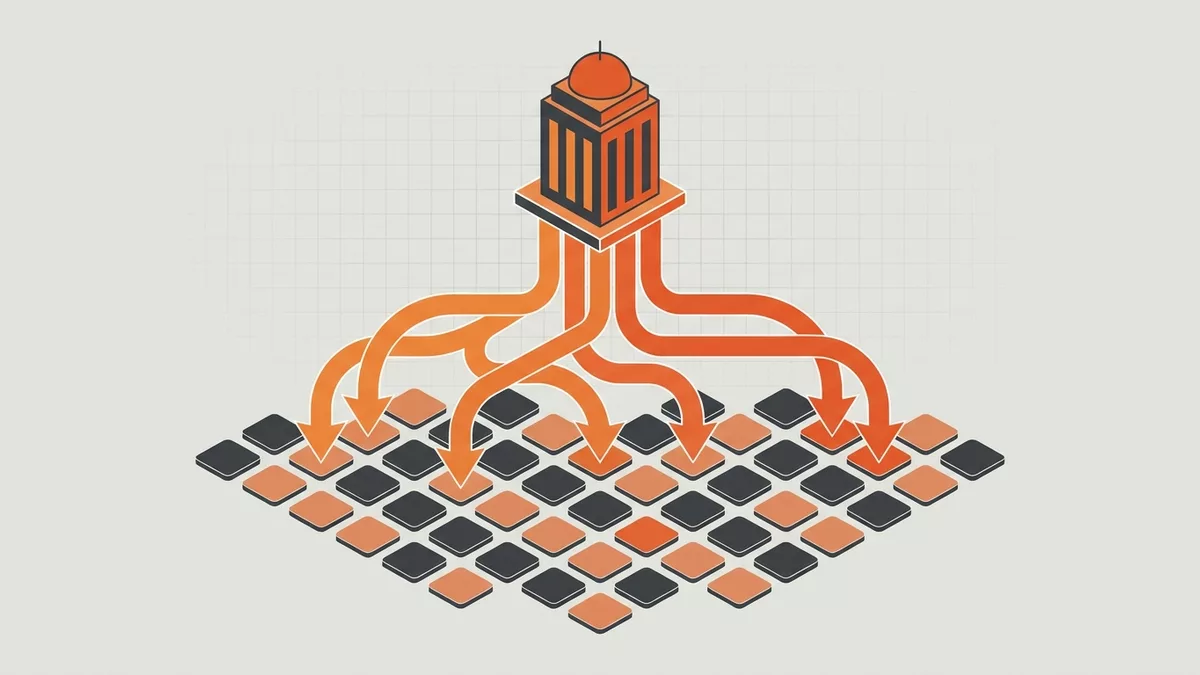
Think of DeFi Technologies as a manufacturer and distributor of financial wrappers. The raw material is a crypto-asset. The finished product is an exchange-traded product — an ETP — that holds or tracks that asset and trades under a ticker on a regulated venue. Valour, the subsidiary that does this, issues these products and lists them on exchanges including Spotlight Stock Market in Sweden, Euronext in Amsterdam and Paris, the Frankfurt exchange, and B3 in Brazil.
Valour’s products are physically backed, meaning the underlying crypto-assets are actually held rather than synthetically replicated, with assets kept at third-party custodians — Copper and Komainu. That structure matters to how the product behaves, and it also tells you something about the operating model: the issuer is responsible for creating the product, getting it listed, arranging custody, handling market-making relationships, and keeping the whole thing compliant in each jurisdiction where it sells. None of that is glamorous. All of it is the business.
What an ETP issuer is, and how it earns money #
An ETP issuer makes money from a management fee expressed as an annual percentage of assets under management. If a product holds a given pool of assets and charges 1.9% a year, the issuer accrues roughly that percentage annually against the pool. The fee is typically taken out of the product itself, which is why investors rarely see a separate bill.
Two variables therefore drive revenue: how much money is in the products, and what fee those products charge. Assets under management move for two reasons of their own — net flows (investors buying in or selling out) and price (the crypto-assets held inside the products going up or down in value). That second point is the one most people miss. Even if not a single new investor arrives, a rising crypto market mechanically increases assets under management, and therefore the fee base. A falling market does the reverse, just as mechanically. This is why an issuer’s results are leveraged to crypto prices without the company necessarily taking a directional bet itself.
Valour’s fee schedule shows how the level varies by product. The standard annual management fee across most of its single-asset SEK-denominated products is 1.9%. But Bitcoin Zero and Ethereum Zero carry 0%. Hedera is 2.5%. Bitcoin Carbon Neutral is 1.49%, and Bitcoin Physical Staking is 0.9%. So the blended fee across a product range is not a single number — it depends on where the money actually sits. If most assets pile into a 0% product, the revenue contribution looks very different than if they sit in a 1.9% one. If you want the mechanics of the wrapper itself, see what is an ETN.
What the product range looks like #
The range spans a large number of single-asset ETPs plus index and basket products. Breadth is part of the strategy: being early to a token that does not yet have a listed wrapper in a given market can win assets before larger competitors arrive.
A concrete example. In May 2024, Valour launched Toncoin (TON) and Internet Computer (ICP) ETPs in the Nordics alongside a Chainlink (LINK) ETP. The Toncoin product was the first of its kind in the Nordics. That product is now called Valour Gram SEK, following the token’s rename from Toncoin to Gram, which took effect on 15 June 2026. It is a small illustration of the operational reality of this business — product names, underlying assets, and listings all require ongoing maintenance.
One practical note for North American readers: these products are listed on European and Brazilian venues. Whether you can access any particular one depends on your broker and your jurisdiction. The stock and the products are not the same access question.
Why this is a “picks and shovels” exposure #
The old mining analogy applies reasonably well. A company selling picks and shovels to prospectors earns revenue from activity in the gold field rather than from finding gold itself. An ETP issuer earns fees from money flowing into crypto products rather than from correctly predicting which coin goes up.
That does not make it safe or uncorrelated — the fee base is denominated in crypto value, so the correlation to crypto markets is high. But the exposure has a different shape. It comes with an operating business attached: staff, compliance, exchange relationships, custody arrangements, and fixed costs that do not shrink when markets do. You are also often reading about it in the same breath as crypto treasury stocks, which is a genuinely different model — a treasury company’s value tracks coins on its own balance sheet, while a fee-earning issuer’s value tracks assets it holds on behalf of other people.
Owning the stock versus owning the product #
This is the distinction most worth getting right, and it trips up a lot of people.
If you buy a Valour ETP, you are seeking exposure to the underlying crypto-asset. Your return tracks that asset, less the annual management fee. You are not exposed to how well the issuer runs its business, beyond the counterparty and structural risks of the wrapper itself.
If you buy the stock, you are buying a business. Your return depends on the company’s revenue, costs, capital decisions, competitive position, and whatever the market decides to pay for those things. The two move together at times, because crypto prices influence both. They are not the same instrument, they do not have the same risks, and they can behave very differently in the same market.
The risks worth taking seriously #
Cyclicality. Because revenue is a percentage of assets under management, and assets under management fall when crypto prices fall, revenue is inherently cyclical. A sharp drawdown can compress revenue quickly and from two directions at once, as prices drop and nervous investors redeem.
Fee compression. Fee levels in this market are under competitive pressure. The clearest evidence is inside Valour’s own range: Bitcoin Zero and Ethereum Zero carry a 0% management fee. When an issuer offers a flagship product at zero, it is competing on price. Whatever the strategic logic, fee compression is a structural risk to any business whose revenue is a percentage.
Competition. The company competes with larger, better-capitalized ETP issuers that have longer track records, deeper distribution, and the ability to absorb thin margins for longer.
Regulation. What can be listed, where, and to whom is set by regulators. Rule changes can open markets or close them, and can affect which products remain sellable in which jurisdictions. This is not a hypothetical risk for a business that operates across several regulatory regimes.
What to look at if you research it further #
Focus on the disclosures that map to the revenue mechanism. Assets under management and its trend over several quarters. Net flows separated from price effects, because a rising asset base driven purely by crypto prices is a weaker signal than one driven by new money. The fee mix — which products hold the assets, and at what fee levels. Product launches and listings, which show whether distribution is expanding. And the cost base, since fixed costs against cyclical revenue are what turn a good year into a great one and a bad year into a painful one.
FAQ #
What does DeFi Technologies do? #
It is a Nasdaq-listed company whose subsidiary, Valour Inc., issues exchange-traded products that give investors exposure to crypto-assets through ordinary brokerage accounts. Those products are physically backed, with assets held at third-party custodians Copper and Komainu, and listed on venues including Spotlight Stock Market, Euronext Amsterdam and Paris, Frankfurt, and B3 in Brazil.
Is buying DEFT the same as buying crypto? #
No. Buying one of Valour’s ETPs is a way to seek exposure to a crypto-asset. Buying the stock is a way to own a business whose revenue depends on crypto markets. The two are correlated but structurally different, with different risks. If that distinction interests you, crypto stocks vs bitcoin covers it in more depth.
How does an ETP issuer make money? #
Through recurring annual management fees charged on assets held in its products. Valour’s standard fee across most single-asset SEK products is 1.9%, with exceptions: 0% on Bitcoin Zero and Ethereum Zero, 2.5% on Hedera, 1.49% on Bitcoin Carbon Neutral, and 0.9% on Bitcoin Physical Staking.
What are the main risks? #
Revenue is tied to crypto prices and asset levels, so results are cyclical and can fall sharply in a downturn. Fee compression is a live competitive threat, evidenced by 0% products in the market. The company competes with larger established issuers. And regulatory change determines what can be listed and sold in each market.
This is not financial advice. Capital at risk. Crypto-assets and crypto-linked equities are highly volatile. Do your own research and consult a qualified adviser.